
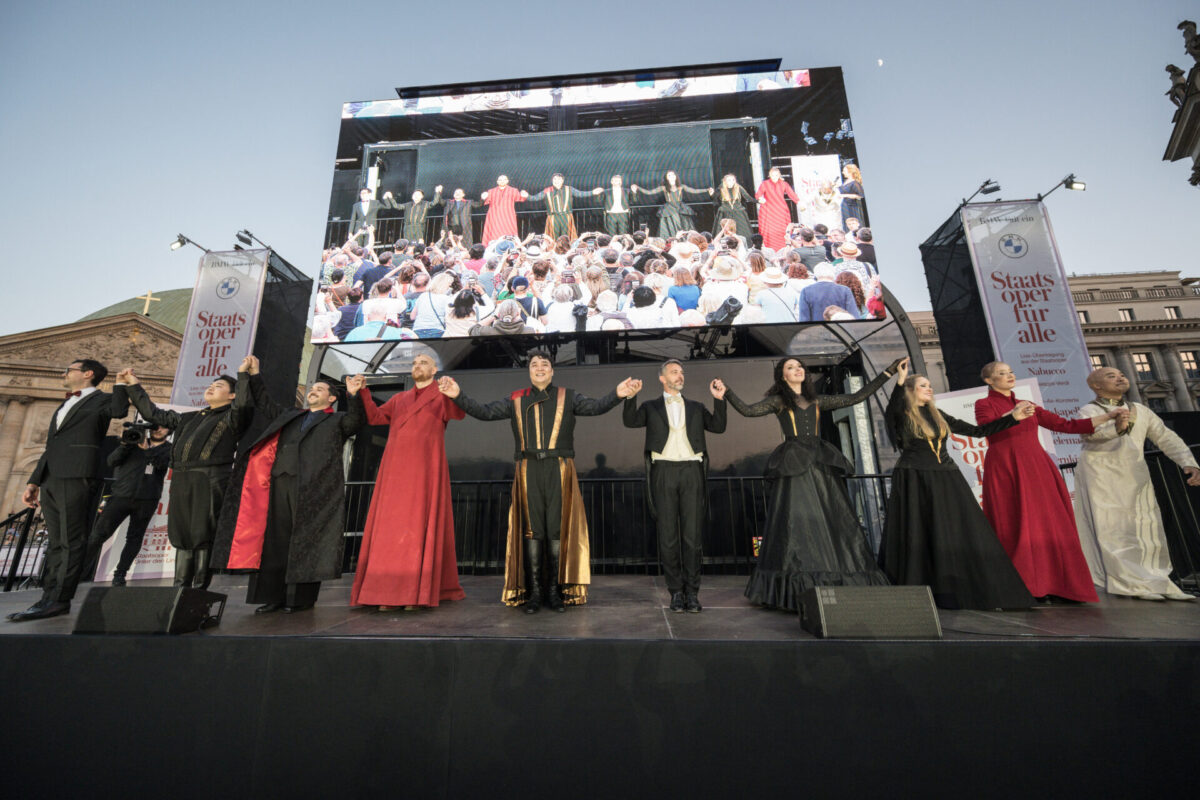
Schlussapplaus Giuseppe Verdis Oper „Nabucco“ / Open-Air-Konzert der Staatskapelle Berlin dirigiert von Francesco Lanzillotta © Peter Adamik
Für Sie und Euch in den Zeitungen gefunden
DIE DIENSTAG-PRESSE – 26. MAI 2026
Berlin/Staatsoper
Die Staatsoper für alle feiert mit grandiosen Sängern das Grundgesetz
Staatsoper für alle in Berlin. So wörtlich wie in dieser Stadt wird das nirgends zelebriert: Alle, alle, alle sind sie da: Die Leute mit Picknickdecke, die Influencer mit den geilen Klamotten, die Herren mit Fliege und die Damen mit den tiefen Ausschnitten. Die Schauspieler aus allen Ecken der Republik, die Vertreter des Sponsors und die Presse von klassik-begeistert bis Super-Illu. Wenn man die Augen ein wenig zukneift, sieht man das Personal vieler Opern in den 30.000 Leuten auf dem Bebelplatz vor der großen Freiluftbühne und bei den geladenen sowie zahlenden Gästen im Opernhaus Unter den Linden.
Von Sandra Grohmann
Klassik-begeistert.de
Berlin
Berliner „Staatsoper für alle“ bringt Chefdirigent Thielemann ins Schwitzen
Bei sommerlichen Temperaturen hat die Berliner Staatsoper viele Menschen mit einem kostenlosen Konzert angelockt. Generalmusikdirektor Christian Thielemann dirigierte am Sonntagmittag unter freiem Himmel auf dem Bebelplatz und kam dabei mitunter ins Schwitzen. Auf dem Programm standen Werke von Ludwig van Beethoven. Bereits am Vorabend war eine Aufführung aus dem Opernhaus Unter den Linden live auf die große Leinwand am Platz übertragen worden. Gespielt wurde Giuseppe Verdis „Nabucco“.
rbb24.de
Wien
„Eugen Onegin“ mit fulminanter Asmik Grigorian an der Staatsoper
Die Sängerin verleiht Tschaikowskis Oper in Dmitri Tcherniakovs Regie vom Moskauer Bolschoi-Theater Intensität. Wer dabei war, hat es nicht vergessen: Bei Eugen Onegin gab es an der Wiener Staatsoper 2020 schon Buhs vor dem ersten Ton. Es war Coronazeit, nur Tage vor dem zweiten Lockdown; man reagierte erbost auf die Aufforderung, auch während der Vorstellung Maske zu tragen. Die neue Direktion war dennoch gerade dabei, das Repertoire durch die Übernahme von Produktionen anderer Häuser zu erneuern. Es gelang, aber eben unter besonderen Bedingungen.
DerStandard.at
Bitte Ruhe! Sächsische Staatskapelle Dresden mit Verdis Requiem
Im Musikverein baten auch ein hochkarätiges Solistenquartett und der Singverein um ewigen Seelenfrieden. Tag für Tag, Herzschlag für Herzschlag strebt jedes menschliche Leben seinem Ende entgegen. Glaubensgemeinschaften spenden ihren Anhängern Trost beim Verlust von Angehörigen und unternehmen kühne Versuche, das nebulöse Mysterium des Danach zu konkretisieren, Stichwort: das Jüngste Gericht. Womit wir beim Katholizismus wären und damit auch, so ein bisschen, bei Giuseppe Verdi. Dessen Messa da Requiem führte die Sächsische Staatskapelle Dresden unter der Leitung von Daniele Gatti im Musikverein auf.
DerStandard.at
Wien/Musikverein
Musikverein: Totenmesse aus Sachsen mit Garanča und Bernheim als Stars (Bezahlartikel)
Verdis Requiem mit prominenten Solisten, dem Wiener Singverein und der Staatskapelle Dresden unter Daniele Gatti: Herz, was willst du mehr?
DiePresse.com
Musikverein: Alte Klagelaute von Ian Bostridge und Europa Galante (Bezahlartikel)
Der englische Tenor und das italienische Ensemble mit Musik von der Wende zwischen Renaissance und Barock: ein Abend vor allem für erklärte Fans.
DiePresse.com
Wien/Staatsoper
Mo., 25. Mai 2026: Richard Wagner, Die Walküre
Eine sehr klare „Geschlechterverteilung“ ist von der heutigen „Walküre“ zu berichten, die Damen waren nämlich geschlossen besser als die Herren. Das Wiener Rollendebüt von Camilla Nylund als Brünnhilde kann ich zu meiner Überraschung als sehr geglückt bezeichnen (nicht nur ich als Nylund-Fan, sondern das war generell der Galeriestehplatz-Tenor): Auch wenn ihre Stärken nach wie vor bei Strauss liegen und ich sie mir immer noch als Sieglinde vorstellen könnte, entledigte sie sich der Brünnhilde sehr gut.
forumconbrio.com
Salzburg/Pfingstfestspiele
„Il viaggio“ überzeugt in Salzburg als humorvoll sprühendes Feuerwerk von groteskem Humor
Mit dieser Premiere der Salzburger Pfingstfestspiele 2026 – unter der Aegide und pointierter Mitwirkung der großen Cecilia Bartoli – hat der renommierte Aufführungsort Salzburg einen fulminanten Start hingelegt.
Von Dr. Charles E. Ritterband
Klassik-begeistert.de
Salzburg
Ein Hotel voller Narren – „Il viaggio a Reims“ bei den Salzburger Pfingstfestspielen (2. Rezension)
Aus heutiger Sicht mag es verwunderlich erscheinen, dass Gioachino Rossini sein anlässlich der Krönung des französischen Königs Karl X. komponiertes Dramma giocoso „Il viaggio a Reims“ nach nur vier Aufführungen absetzen ließ. Während der Komponist einen Teil des musikalischen Materials in „Le comte Ory“ wiederverwendete, hütete er den Rest bis zu seinem Tod. Danach gelangte die autographische Partitur von Ort zu Ort, bis sie schließlich in der römischen Accademia di Santa Cecilia in archivalischen Tiefen versank und erst 1977 wiederentdeckt wurde.
opernmagazin.de
Rampensingen en miniature
Die traditionsreiche im späten 18. Jahrhundert gegründete Compagnia Marionettistica Carlo Colla & Figli aus Mailand gastierte mit ihren Marionetten bei den Pfingstfestspielen mit Monteverdis Oper Il ritorno d’Ulisse in patria.
drehpunktKultur.at
Monteverdi in Salzburg: Frühe Barockmusik mit Marionetten stilvoll inszeniert
opernmagazin.de
Augsburg
Die Schöne und das Biest – moderner Opernklassiker von Philip Glass in Augsburg
Audio von Jörn Florian Fuchs (13,13 Minuten)
deutschlandfunk.de
Show und Action! Philip Glass’ Oper aufgepeppt mit einer Kampfsportschule
orpheus-magazin.de
Hagen
Blick in den Abgrund: „Salome“ im Theater Hagen
Was war das gestern im Theater Hagen? Mit ein wenig zeitlichem Abstand komme ich zum Schluss, dass dies wohl die eindringlichste und schonungsloseste Inszenierung von Richard Strauss’ Oper SALOME war, die ich bisher erlebt habe. Regisseurin Noa Naamat nimmt uns mit in eine Welt voller Dekadenz, Abgründen, Begierden und sexuellem Missbrauch.
opernmagazin.de
Links zu englischsprachigen Artikeln
Göttingen
Göttingen International Handel Festival 2026 Review: Deidamia
operawire.com
Dresden
Enjoyable Dresden concert by countertenor Xavier Sabata and saxophone quartet Kebyart
seenandheard-international.com
Luxemburg
Philharmonie Luxembourg Announces 2026-27 Season
Featuring Andrè Schuen, Magdalena Kožená, Christian Gerhaher, Julia Lezhneva, Franco Fagioli
operawire.com
Liège
Review: BARTLEBY / LA VOIX HUMAINE at Opéra Royal De Wallonie
Thrilling Double Excellency of Theatre and Music
broadwayworld.com
Rotterdam
Intimate colossus: Daniil Trifonov plays Brahms with the Rotterdam Philharmonic
bachtrack.com/de
London
Rattle Returns to the LSO with Gerhard, Richard Strauss and Mahler
operatoday.com
New York
Review: TURANDOT Returns for Another Go-Around at the Met in Classic Zeffirelli Production Game Cast Headed by Monastyrska and Alagna, Grigorian and Peixin, under Maestro Lyniv
broadwayworld.com
Cleveland
Aspects of courage in four rare works at Cleveland’s Mandel Opera and Humanities Festival
seenandheard-international.com
Los Angeles
Superb cast and Dudamel’s vigorous conducting make three-evening Die Walküre a winner in Los Angeles
Brünnhilde: Christine Goerke; Wotan: Ryan Speedo Green
seenandheard-international.com
Sydney
The First Murder (Pinchgut Opera)
This brilliantly conceived production of Scarlatti’s 1707 oratorio is set in contemporary times, on a beach, with superb performances all round.
limelight-arts.com.au
Feuilleton
What Is Regietheater in Opera?
operagazet.com
Q & A: Baritone Roderick Williams On His Forthcoming Recital
At The Music At Paxton Festival & Working With The Innovative Composer Michel van der Aa
operawire.com
Obituary
Television Producer Brian Large Dies at 87
operawire.com
Recordings
Gustav Mahler: Symphonies 1–9 (Czech Philharmonic Orchestra, Semyon Bychkov) Bychkov and his Prague forces prioritise history over histrionics.
limelight-arts.com.au
Classical Album Review: Beyond “East Meets West” — Anne-Sophie Mutter’s Crosscurrents
artfuse.org
Ballett / Tanz / Performance
Salzburg
Vom Meeresgrund zu den Sternen
Andersens Märchen Die kleine Meerjungfrau wird im Ballett von John Neumeier zu einer heilsmysthischen Erduldens- und Erlösungsstory
DrehpunktKultur.at
Wien/Volkstheater
Trajal Harrells Solo „Music Music“: Tanz im Gedächtnispalast der Töne
Faszination angesichts der Uraufführung bei den Wiener Festwochen im Volkstheater
DerStandard.at
Prinzendorf/NÖ
Pfingsten mit Florentina Holzinger: Hexentänze mit Monstertruck
Die Performance-Meute zog in Prinzendorf alle Register. Mit Orchester, Nadeln und vielen Stunts. Der Heilige Geist kam per Fallschirm. Oh, und Nitsch war auch da!
DerStandard.at
Düsseldorf
Deutsche Oper am Rhein Düsseldorf, Ballett: „Endstation Sehnsucht“, John Neumeier
DerOpernfreund.de
Sprechtheater
Gmunden
Sven-Eric Bechtolf: „Wir haben alle Frakturen“
Sven-Eric Bechtolf (68) zählt zu den großen Stimmen des deutschsprachigen Theaters: Ab 3. Juli spielt er die Hauptrolle in „Elisabeth II.“, das Bernhard-Stück hat in Gmunden die Premiere. Mit der „Krone“ sprach er über Thomas Bernhard, menschliche Abgründe und über das, was ihn auffängt, wenn Zweifel da sind.
krone.at
Ausstellungen/Kunst
Wien/Prinzendorf/NÖ
Pfingst-Performance. Nitsch, von Holzinger frisch durchblutet
An teils kindlichen Provokationen lassen es die Festwochen ja nicht mangeln. Aber dieses Projekt reichte zumindest prinzipiell über die Krawall-Routine hinaus. Der 2022 verstorbene Hermann Nitsch hat sich mit seinen Aktionen in die Kunstgeschichte eingeschrieben, die Choreografin Florentina Holzinger klopft dort ambitioniert an. Das Werk beider Österreicher zusammenzuführen, war eine schlüssige Idee: Größen wie Nitsch droht posthum die Versteinerung zum Monument. Nun sollte sein philosophisch-theologisch-psychoanalytisches Orgien-Mysterien-Theater, das alle Sinne und Künste mobilisiert, mit frischer Energie durchblutet werden.
krone.at
Film/TV
„Tatort“ Schauspielerin Sibel Kekilli hat geheiratet
Die Schauspielerin schirmt ihr Privatleben konsequent ab. Nun macht Sibel Kekilli eine Ausnahme und verkündet ihre Hochzeit.
Jahrelang ließ Sibel Kekilli die Öffentlichkeit nicht an ihr Privatleben heran. Umso überraschender sind ist die neue Aufnahme auf ihrem Instagram-Profil. Die Schauspielerin postete ein Bild von sich im Brautkleid und machte damit ihre Hochzeit publik.
t-online.de
Religion
KURIER-History
Toni Faber und die Zölibat-Debatte: Die große Enthaltsamkeitslüge
Geh mit Gott, aber geh: Dompfarrer Faber vor Pensionierung: Der populäre Dompfarrer Toni Faber, der nicht viel von priesterlicher Ehelosigkeit hält, wird 2027 in die Pension verabschiedet. Das wirft Fragen auf. Etwa: Wer hat’s wann – und warum – erfunden? Im Jahr 1074 begann Papst Gregor VII. einen regelrechten Feldzug gegen verheiratete Priester: „Wer nicht aufgibt, Konkubinen und Frauen zu haben, soll keine Messe mehr hören“, ordnete er an und löste damit prompt Tumulte aus. In Paris und Mainz schrien Geistliche auf Synoden gegen päpstliche Gesandte an, die mitunter fliehen mussten. Denn vielerorts lebte der Klerus damals ganz selbstverständlich mit Frau und Kindern. Das frühe Christentum kannte keinen verpflichtenden Zölibat für Priester. Wobei der Mittelalterforscher und Kirchenhistoriker Mihailo Popovic von der Akademie der Wissenschaften darauf hinweist, dass Informationen damals langsam reisten: „Wer von Wien nach Istanbul wollte, brauchte 40 Tage. Die Beschlüsse für den Zölibat sickerten nicht überall durch. Es gab lokal unterschiedlich gelebte Realitäten. Bis ins 15. Jahrhundert sehen wir, dass Priester verheiratet waren.“
Kurier.at
Politik
Österreich
RH-Präsidentin Kraker: „Wenn man die Universitäten kürzen kann, kann man auch die Parteienförderung kürzen“
Rechnungshofpräsidentin Margit Kraker die Sparpläne „knapp bemessen“ – und fordert „Reformmut“ bei der Reformpartnerschaft von Bund, Ländern und Gemeinden. Rechnungshofpräsidentin Margit Kraker findet das geplante Einsparungsvolumen von 2,5 Mrd. Euro im nächsten Doppelbudget „wahrscheinlich sehr knapp bemessen“ und vermisst den Blick auf die langfristige Entwicklung ab 2029 . „Das funktioniert nicht mit dem ewigen Fortschreiben. Auch Kürzungen von Investitionen sind ja schwierig, denn irgendwann fehlen sie“, sagte sie am Samstag im Ö1-„Mittagsjournal“. Beim Unibudget stimmte sie nicht in die Forderung nach mehr Geld ein.
DiePresse.com
Innsbruck/Sigmund Freud-Uni
Dornauer geißelt erneut Tiroler Landesregierung
„Die Absage der Sigmund Freud Privatuniversität (SFU) für einen neuen Standort in Wörgl ist ein herber Rückschlag für das Tiroler Unterland“, sagt der freie Abgeordnete Georg Dornauer. Die SFU hat, wie berichtet, einen Rückzieher gemacht und die Außenstelle in Wörgl ad acta gelegt. Dem Land warfen die Verantwortlichen mangelnde Unterstützung vor. Was die zuständige Landesrätin Cornelia Hagele dementiert – die „Krone“ berichtete.
krone.at
Österreich
Uni-Rektoren kassieren mehr als der Kanzler. Bis zu 400.000 Euro
Österreichs Uni-Rektoren steigen wegen vermeintlicher Einsparungen in der Wissenschaft auf die Barrikaden – verdienen selbst aber im internationalen Vergleich bei überschaubar guten Ergebnissen überdurchschnittlich viel. Die „Krone“ enthüllt nun die Luxus-Gagen in der Höhe von bis zu 195 pro Student.
krone.at
________________
Unter’m Strich
Gefahr auf den Weiden: Sind unsere Kühe Killer oder doch sehr klug?
In Osttirol wird eine Frau durch eine wild gewordene Kuhherde getötet. Nicht der erste tragische Zwischenfall dieser Art. Wie gefährlich sind Kühe? Die „Krone“ sprach mit Veterinärmediziner Lorenz Khol über friedliebende Tiere, die nicht immer harmlos sind – und die erstaunliche Eigenschaften besitzen.
krone.at
Wien
Kasperl der Woche Strache: Jetzt hält er sich schon für James Bond
Der Ex-Vizekanzler Heinz-Christian Strache ist Österreichs größte Doppel-Null. Bewirbt er sich jetzt als neuer Darsteller der Action-Reihe?
krone.at
Deutschland/Fußball-Bundesliga
Relegations-Krimi: 29 Jahre erstklassig – jetzt steigt Wolfsburg ab!
Der VfL Wolfsburg muss nach 29-jähriger Bundesligazugehörigkeit in die zweite deutsche Fußball-Liga absteigen. Die „Wölfe“ unterlagen im Relegationsrückspiel in Paderborn 1:2 nach Verlängerung. Das Hinspiel hatte 0:0 geendet. Für Paderborn, den Dritten der Zweitligasaison, ist es der dritte Oberhaus-Aufstieg nach 2014 und 2019. Das Abenteuer dauerte dann jeweils nur eine Saison. Laurin Curda erzielte das Goldtor (100.) für den ab der 14. Minute in Überzahl spielenden SC.
krone.at
Hoffen auf Eishockey-Sensation: „Vielleicht verlieren USA die Nerven“ (Bezahlartikel)
Österreich braucht für den Viertelfinal-Einzug bei der Eishockey-WM eine Sensation. Wie diese gegen die USA gelingen soll.
Kurier.at
INFOS DES TAGES (DIENSTAG, 26. MAI 2026)
INFOS DES TAGES (DIENSTAG, 26. MAI 2026)
Quelle: onlinemerker.com

WIEN / Staatsoper:
DIE WALKÜRE von Richard Wagner
36. und vorletzte Aufführung in dieser Inszenierung
25. Mai 2026
Wagner, Wirbel, Wonne und Weh
Wagner ist laut. Von der „Flucht-Musik“, die in den ersten Akt der „Walküre“ führt, über „Wälse“- und „Notung“-Schreie bis zum „Walkürenritt“ (der noch nie besser „bebildert“ wurde als durch angreifende amerikanische Kampfhubschrauber in dem Film „Apocalypse Now“). Dazu braucht man als Dirigent Temperament, dazu muss man sich bekennen, und Pablo Heras-Casado tat es überzeugend beim zweiten „Ring“-Abend. Er wusste im übrigen auch, dass er Sänger hatte, die mit dem Orchester mithalten konnten, hat sich also nie zurück genommen. Der „Sog“ der Wagner-Klänge riß das Publikum den ganzen Abend mit. Dabei ist diese Musik so hoch intelligent illustrierend, so reich an allen nur möglichen Nuancen, dass sie immer wieder umschwappt. Aber der Dirigent kam nie aus dem Konzept oder dem Takt, der Wagner-„Wirbel“ war perfekt.
Der Abend verzeichnete drei Rollendebuts, auf die man sehr neugierig war, vor allem auf Michael Spyres als Siegmund, diesmal mit der richtigen Stimme in der richtigen Rolle unterwegs. Die breite Mittellage und die fabelhafte Höhe mit schier unerschöpflichen Kraftreserven (nur beim finalen „Wälsungenblut“ des ersten Aktes hatte man sekundenlang Sorge, ob er den Hof mit Müh und Not erreichen würde, und er tat es). Siegmund ist eine Power-Rolle, alle Ausdrucksnuancen verfangen nicht, wenn die Kraft fehlt – und hier war sie da…
________________________________________________________________________________________
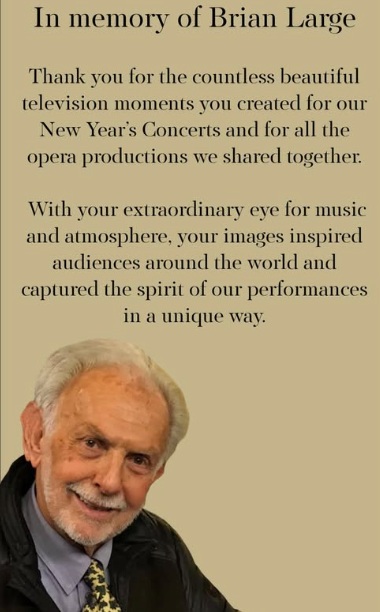
Brian Large ist tot
________________________________________________________________________________________
Third Week of the Prague Spring Festival 2026
Prague, 24 May 2026 | The third week at the Prague Spring International Music Festival will be marked by large-scale vocal-instrumental works featuring outstanding casts of soloists. On 25 May, Hector Berlioz’s “légende dramatique” La Damnation de Faust will be performed at the festival for only the second time in its history, with Paul Appleby (Faust), Alexander Vinogradov (Méphistophélès), Štěpánka Pučálková (Marguerite) and Pavel Švingr (Brander) as soloists. The Prague Symphony Orchestra, the Prague Philharmonic Choir, the Prague Philharmonic Children’s Choir and the quartet of soloists will be conducted by Tomáš Netopil. The concert will be broadcast live by Czech Radio Vltava.
French repertoire will also feature prominently on 26 May, when Prague Spring 2026 Artist-in-Residence Barbara Hannigan will appear in the dual role of singer and conductor in her debut with the Czech Philharmonic at the Rudolfinum, presenting her own interpretation of Francis Poulenc’s operatic monodrama The Human Voice. The project, enhanced by live video projections, will receive its Czech premiere. The “French triptych” will conclude on 27 May with a work on the border between oratorio and opera – Jules Massenet’s Marie-Magdeleine. Conducted by Robert Jindra, who will lead the Chorus and Orchestra of the National Theatre on the stage of the National Theatre, the title roles will be performed by soprano Aleksandra Kurzak (Mary Magdalene), tenor Kang Wang (Jesus), mezzo-soprano Arnheiður Eiríksdóttir (Martha) and bass František Zahradníček (Judas). The project has been created in cooperation with the National Theatre. This remarkable series of large-scale vocal-instrumental works will culminate on 28 May with a performance of Joseph Haydn’s oratorio The Creation. It was last heard at the festival in 1982 under Austrian conductor Leopold Hager. This time, the performance will be conducted by Václav Luks leading the Orchestra and Choir of the Age of Enlightenment.
Among the outstanding vocal-instrumental events of the coming week we may also include one of the breakthrough works of the late 20th century by Prague Offspring 2026 Composer-in-Residence Unsuk Chin, Akrostichon-Wortspiel. The composition, which opened the doors of the world’s leading concert halls to Unsuk Chin, will be performed on the opening evening of Prague Offspring on 29 May by the Ensemble Modern and soprano Sarah Aristidou. During her festival residency, audiences can also look forward to Unsuk Chin’s Double Concerto for piano, percussion and ensemble (29 May) and Gougalōn (30 May), inspired by Korean street theatre. Prague Offspring will also present five world premieres commissioned by the Prague Spring International Music Festival: Die Intercedences by Michal Nejtek (29 May), based on fragments of texts by Franz Kafka, COVID-19 (Fury and Silence) by Jiří Kadeřábek, Unravel by Michaela Antalová, 423 by Tobiáš Horváth and funktionslust : R by Patrik Kako (30 May). Alongside the concerts, audiences will also be able to draw inspiration over the two days, 29 and 30 May, at the DOX Centre for Contemporary Art through workshops, open discussions and a masterclass with members of the Ensemble Modern. A public masterclass will also be led by Barbara Hannigan on 31 May in the Suk Hall of the Rudolfinum.
On Saturday 30 May, from 14.00 to 20.00, the third edition of the popular SpringTEEN project for the youngest audiences will take place in the grounds of the Convent of St Agnes. Children and teenagers can once again look forward to concerts and workshops inspired this year by the worlds of visualisation, movement and musical theatre. This year’s stars of SpringTEEN will include actor and singer Jan Cina, the Floex Ensemble with the robot Josef, and the traditional SpringTEEN Band, now expanded by SpringTEEN Band Junior. The afternoon will culminate at 18.30 in the Grand Finale, featuring the world premiere of The Spring by composer and conductor Marko Ivanović, traditionally involving both children and the SpringTEEN audience. Thanks to the support of ABB Česká republika, SpringTEEN will once again connect the worlds of technology and art, while a new feature this year will be a workshop and Chill-Out Zone in cooperation with the AutTalk Foundation, which supports children with autism spectrum disorder. The SpringTEEN programme has once again been curated by Klára Boudalová.
The third festival week will culminate in a Sunday full of music. On 31 May at the Rudolfinum, a chamber concert of works by Antonín Dvořák performed by violinist Jiří Vodička and pianist David Mareček will begin at 17.00. In the evening, two extraordinary works of the 19th and 20th centuries will be performed at the Municipal House by the Deutsches Symphonie-Orchester Berlin: Dmitri Shostakovich’s Concerto for Cello and Orchestra No. 1, written for the winner of the 1952 Prague Spring Competition, Mstislav Rostropovich, and Anton Bruckner’s Symphony No. 6. The solo part in the Shostakovich concerto will this time be performed by the winner of the 2025 Prague Spring Competition, Japanese cellist Yuya Mizuno. The Grammy Award-winning orchestra will be conducted by another outstanding Czech conductor, Tomáš Hanus. On Sunday 31 May, the traditional memorial tribute to Josef Suk will also take place with a concert in Křečovice.
The week full of music will open with the cinema premiere of the documentary Prague Spring – A Window onto the World by director and screenwriter Martin Suchánek, created to mark the 80th anniversary of the Prague Spring Festival. The premiere will take place in the presence of the filmmakers on Monday 25 May at Cinema 35 at the French Institute in Prague. The documentary, co-produced by the Prague Spring, Czech Television and innogy Česká republika, is already available on Czech Television’s iVysílání platform.
Follow the Prague Spring International Music Competition on social media
Instagram: @imcpraguespring
________________________________________________________________________________
Wien / Wiener Konzerthaus: Eine wertvolle Initiative, bulgarisch (24.5.2026)
Balaballa buci ballala … oder … nein, „Bangeranga“ ist der Titel des bulgarischen Siegessong des heurigen Eurovision Song Contest. Hat Bulgariens Jungvolk große Freude gebracht, wird aber hierzuland so schnell vergessen sein wie die Beiträge der österreichischen Zufallsgewinner Conchita und JJ. Also, das große Geschäft am äußeren Rande der Kulturszene, soll in Ordnung sein. Für richtige Ordnung in Sache Kultur setzt jedoch eine managende feine Wiener Pianistin mit der von ihr alljährlich initiierten musikalischen „Gala der Bulgarischen Kultur und Musik“ im Mozartsaal des Wiener Konzerthauses. Nun ja, ihr Name verrät schon ihre Herkunft: Donka Angatscheva feierte mit ebenfalls eingebürgerten Wiener KünstlerInnen und viel Publikum einen Festtag ihres Geburtslandes.
Zwar hat es jazzig mit dem Jivko Petrov Trio begonnen, doch von Bangeranga weit entfernt spielte Teodora Miteva auf ihrem Violoncello Morricone und de Fallas „Feuertanz“ auf. Sang die nun unterrichtende Sopranistin Ildikó Raimondi Mozart und mit ihrer Mozarteum-Studentin Madlen Chobanova „Wien, Wien, nur du allein“. Sandra Pires bewährte sich auch im bulgarischen Jargon. Lidia Baich begnügte sich mit einem Satz aus Max Bruchs 1. Violinkonzert. Ja, auch ein kleines Orchester aus dem Balkangebirge, aus Wraza, ist angereist gekommen und hat die Solistinnen begleitet. Stimmungsvoll im Frédéric Chopins cis-Moll-Nocturne, besonders stimmungsvoll von Angatscheva am Bösendorfer mitgelebt. Und dazu noch die Wiener Wladigeroff Brothers und ein bisschen mehr bulgarisches Musikgut. Und, als kleiner Kommentar dazu: Nicht nur das Wiener Staatsballett sondern die ganze heimische Kulturszene lebt von KünstlerInnen, welchen den Weg nach Wien eingeschlagen haben.
Meinhard Rüdenauer
_____________________________________________________________________________________
INTERVIEW STEVEN MERCURIO: I enjoy composing, arranging, and conducting the most.
Mit Steven Mercurio sprach Markéta Jůzová
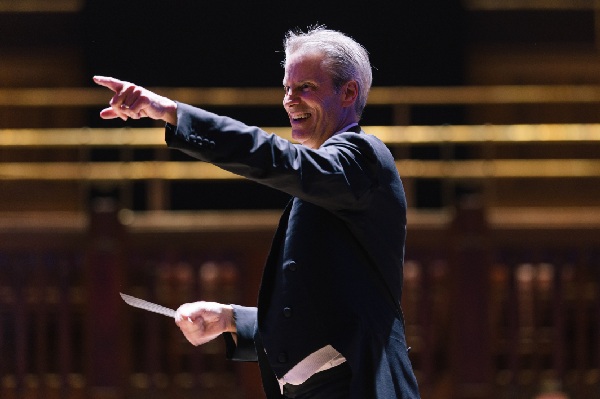
Steven Mercurio. Foto: Jan Maly
Maestro Steven Mercurio, an internationally acclaimed conductor and composer and currently Music Director of the Czech National Symphony Orchestra, served as Music Director of the Spoleto Festival for five years and Principal Conductor for the Opera Company of Philadelphia. A sought-after collaborator on many award-winning recordings, arrangements and film projects, he received his master’s degree from the Juilliard School.
Maestro Mercurio (*1956), a former long-time assistant to Leonard Bernstein, is the court conductor of the famous Italian tenor Andrea Bocelli and has toured with him many times. He has conducted various operatic and symphonic television broadcasts, including the internationally acclaimed „Christmas in Vienna“ series featuring the celebrated Three Tenors (José Carreras, Plácido Domingo and Luciano Pavarotti) and more than sixty operas for the stage in seven different languages …
You come from the state of New York, where you also live. Your surname refers to the Italian culture that you were exposed to as a child. You studied in the U.S. and decided to become a composer and conductor…
Although I was born in Bardonia, New York, I grew up in a family that was influenced not only by American but also by Italian culture. My grandfather moved to the U.S. from Italy before my father was born by just a few weeks. I am proud of my Italian roots, which are clearly reflected, as you say, in my surname Mercurio.
I studied classical music composition in the U.S. first at Boston University where I received my bachelor’s degree in composition. I later became a composition student at the Juilliard School in New York, where I completed my Masters degree. I also taught music theory, harmony and counterpoint at the Juilliard school.
After my studies, I had the great fortune to meet and work with Maestro Leonard Bernstein with whom I created an important musical bond, especially during the last three years of his life. I am deeply convinced that his mentorship profoundly influenced me since his energy, his soulful understanding of the role of music and his even deeper commitment to making a difference in the world through music was incomparable – even to this day. I think a lot of young conductors might dream of becoming famous but I truly believe that throughout those seminal years when I was an assistant to Bernstein, I learned above all to keep my ears, heart and mind open and in service to the music. That was something that could only be learned by watching from somebody as brilliant as Leonard Bernstein.
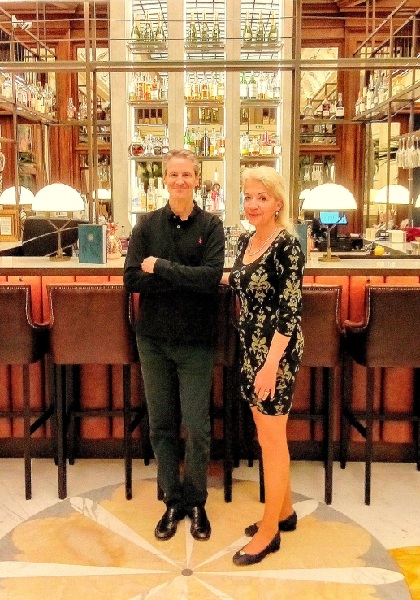
Steven Mercurio, Markéta Jůzová © Archiv
In professional circles, Leonard Bernstein is considered a genius…
Yes, he certainly was a genius. Leonard Bernstein was not only an intellectual, but also a very emotional artist. He composed, conducted, and, was a teacher and promoter of music. He attracted a huge number of people to his profession, many of whom fell in love not only with his compositional works and interpretations, but also with his style of teaching and presenting music on the concert stages around the world. Suffice it to say, he was a great inspiration and role model to me personally.
From Leonard Bernstein, I learned not only the way to communicate with an orchestra, but also how to communicate with the listeners. He taught me the art of being a conductor who belongs to the orchestra. He was not the type of conductor who gave orders to the orchestral players, which they must carry out, but rather, he was a true teacher who felt that the music must come through him and be shown to the orchestral players.
I believe that the listeners at most concerts will also sense this relationship. I really liked how Lenny was able to relax the audience and awaken stronger emotions inside the concertgoers. When I spoke to him after rehearsals, I often saw how completely dedicated he was to the music itself. I was always aware that physically, he wanted to convey to the audience the emotional message that the composer had in mind within his composition.
You are not only a great conductor, but also an excellent concert presenter. You are able to lead the audience emotionally, instructively and humorously.
Thank you. It makes me very happy to hear this. You know, communication with the audience was something I learned by watching Lenny. His famous concerts for young listeners – the “Young People’s Concerts” – were famous and a great inspiration for me. It was always especially true to witness the happiness the orchestra and the audience felt afterward.
To this day, I always want the listeners – the audiences I have the privilege to perform for – to leave the theater feeling that they saw, heard and felt something special. I prefer to welcome an audience into a theater as if they are entering my own personal living room – almost as if they are part of my family. Then, I invite them inside for a listening experience which is not passive, but rather, an active invitation to sit simply and enjoy the music.
Your dream after graduating from the Juilliard School. You have been composing throughout your career and often arrange. How do you write down your compositions?
I usually compose a new piece with a piano and record the notes on paper. I hear the music in my mind. I like to compose directly by hand onto score paper which sadly is not a practice held by many modern day composers. I still like to feel the connection of pencil to paper. Then, I hand the manuscript over to my copyist to prepare a Sibelius program’s printed score and parts. These days, my calendar is quite full. Ironically, when I worked with Leonard Bernstein, I once asked him if he felt that he was missing something when he was very busy professionally. He told me that he wished he had spent more time composing. I feel the same way. I would like to write more but one has to be alone with his or her musical thoughts which is not always easy.
I am very happy that, for example, the world premiere of my large scale orchestral work For Lost Loved Oneswas given its world premiere by Maestro Zubin Mehta and the New York Philharmonic Orchestra. Mercurial Overture was performed in its world premiere by the Oslo Philharmonic at a concert for Médecins Sans Frontières honouring the Nobel Peace Prize-winners, broadcast live on television. And my symphony A Grateful Tail, which is based on American playwright Eugene O’Neill’s „Last Will and Testament of Silverdene Emblem O’Neill,“ was performed in its world premiere by the Czech National Symphony Orchestra.
As I know, you also enjoy arranging very much. You have collaborated with a number of famous performers …
I have always enjoyed doing crossover projects with various artists, including Andrea Bocelli, Plácido Domingo, Bryn Terfel, Chick Corea, Hauser and Sting and I’m working to this day with some young, emerging artists. For example, I remember Sting fondly not only in connection with numerous joint concerts abroad, but also from the realization of the DVD Symphonicities, a live recording for the Deutsche Grammophon label.
I also enjoy helping artists with orchestrations as well as trying to create an environment whereby they feel comfortable so that they can perform at their best. With the Czech National Symphony Orchestra, we also recorded music for the solo album The Player by the renowned cellist Hauser for Sony Music Masterworks. I myself also enjoy playing the guitar, which was my own first virtuoso instrument, but all in all, I enjoy composing, arranging, and conducting the most.
You have also closely linked your artistic career with the famous tenor Andrea Bocelli, with whom you have celebrated thirty years of his career collaborations…
I met Andrea Bocelli in 1998 and since then we have been performing and preparing new musical programs. I love conducting the opera and symphonic repertoire. In addition to the touring around North America, South America, Australia and Europe. In New York with Andrea, I also conducted a gala evening for him with the Metropolitan Opera Orchestra.
We have also made a number of recordings. For example, in Prague with the Czech National Symphony Orchestra the extremely successful album Believe was a great source of professional collaboration and pride. I know Bocelli’s voice extremely well and I know how he feels about musical drama. Andrea Bocelli´s 30th anniversary celebration of his wonderful career was for me also a celebration of our long term musical friendship.
You are Music Director of the Czech National Symphony Orchestra. What do you like about the orchestra?
I love the fact that the Czech National Symphony Orchestra is able to play a wide range of repertoire – compositions across varying genres, and to do so very successfully. I am happy to be their chief conductor and our collaboration is a great joy.
We happily play symphonic, concert, opera and film music, musicals and sometimes jazz compositions. I enjoy passing on my American experience to the players, including when it comes to practicing difficult rhythms in compositions by classical or musical composers from my homeland. It’s great that the Czech National Symphony Orchestra is able to interpret works from multiple genres in a stylish way. I must say that I am proud of our fantastic recordings. I take pride in developing the orchestra as we gain world renown.
We have toured, for example in my own country, in the United Kingdom and the Netherlands. When I saw how the orchestra played with love and the players gave their committed musicianship to the performances, I was extremely proud.
You were Music Director of the Spoleto Festival in Italy and Principal Conductor for the Opera Company of Philadelphia. You have conducted more than sixty operas for the stage in seven different languages. Which premieres were you particularly proud of?
For the Spoleto Festival in Italy, I performed, for example, Gian Carlo Menotti’s Goya (recorded for Nuova Era) and Giacomo Puccini’s Il Trittico, Alban Berg’s Wozzeck, Erich Wolfgang Korngold’s Die Tote Stadt, Dmitri Shostakovich’s The Nose and John Corigliano’s Symphony No.1.
Among my accomplishments in Italy, I conducted the highly acclaimed Italian premiere of the complete version of Alexander von Zemlinsky’s Der Zwerg for the Teatro dell’Opera in Rome, the premiere of Andre Previn’s Streetcar Named Desire in Torino, and the premiere of Kurt Weill’s Lady in the Dark in Palermo and Rome. I also conducted the U.S. premiere of Mieczysław Weinberg’s extremely powerful opera The Passenger.
In other countries, I have conducted a new production of Giuseppe Verdi’s La Traviata for the Staatsoper Bonn and London’s English National Opera, Giacomo Puccini’s La Bohème and Jacques Offenbach’s Les Contes d’Hoffman for the San Francisco Opera. In addition to my operatic performances, my symphonic commitments have taken me across the globe. I have appeared throughout Europe and the United Kingdom, Australia, the Far East and the United States. I have also conducted various operatic and symphonic television broadcasts.
During Advent and Christmas, many classical music lovers still enjoy listening to your album, which you recorded with the famous tenors Plácido Domingo, José Carreras, Luciano Pavarotti and the Vienna Symphony Orchestra in the Austrian capital for Sony Classical Records.
I also enjoy listening to CDs during the holiday season. The concert of the Three Tenors Christmas in Vienna featuring Plácido Domingo, José Carreras and Luciano Pavarotti, has only been conducted in concerts and recordings by Zubin Mehta and James Levine. I became the third and final conductor of their joint recording, which was a great honor for me.
That beautiful concert was in Vienna in 1999 and the CD was released the following year, but we recorded it in December. Performing a beautiful Christmas program with these three iconic tenors is something, to this day, I regard as a very special project.
Your work with the Three Tenors and the Vienna Symphony Orchestra was very interesting for you…
The work with the Three Tenors was for me a joy because they are very different. It was a great time. I had worked a lot with Luciano Pavarotti in the U. S. I knew him the best of the Three Tenors because he had his own vocal competition in Philadelphia, where we worked together as I was Principal Guest Conductor there. I had known him since 1987. His voice was wonderful and he was a great artist, a very generous person especially for the people he trusted.
With Plácido Domingo, I performed not just the Christmas in Vienna recording projects, but also performed Umberto Giordano´s Fedora at the Teatro dell´Opera in Rome. Domingo is a very open personality. José Carreras was the only one of the tenors that I didn’t know. He’s a very kind man and the funniest of the three. The Orchestra and children’s choir for this project were excellent.
You also conduct film music, you have been invited to Hollywood projects…
Film music is fun. Yes, I have also participated on a number of Hollywood films. I also collaborated with director Julie Taymor on the film Frida, a gripping drama about the life of Mexican painter Frida Kahlo, played by Salma Hayek. I recorded the music for the film, which was composed by Elliot Goldenthal, in Los Angeles, New York and London.
Film music is a very intense collaboration with many spontaneous changes. It requires a skillful and flexible approach with the director. When recording, it is extremely important that both the director and the composer are satisfied. Everything happens relatively quickly because recording is very expensive.
Thank you so much for the opportunity to speak with you and your audience. I hope to see you all at a concert near you soon.
Markéta Jůzová